

Corporate film costs: why do quotes differ for the same running time?
You send the same request for a company profile of about 3 minutes to several production houses, and the quotes that come back differ considerably. That gap does not tell you who will do the better job, because each one may be pricing a different way of working. Corporate film costs depend on the amount of work, not the number of minutes: the number of shoot days, the locations, the people on camera, the level of post-production and the versions delivered. As a reference point, the 4 all-in production packages Filmciti publishes range from VND 70–300 million, excluding VAT. This article helps you read a quote group by group before comparing the totals.

In this article
- Running time tells you the length, not the production workload
- Filmciti's 4 corporate film packages
- 5 groups of work to read in a quote
- How should you send a request without an exact budget?
- Reduce costs by making choices, not only by cutting rates
- How much does a corporate film cost if the scope changes?
A company needs a company profile of about 3 minutes to show to partners. It sends the same request to several production houses, yet the quotes that come back differ considerably. One proposes using existing footage; another plans a filming day at the office; a third adds interviews, factory scenes and graphics.
At this point the difference does not tell you which option is more reasonable. The companies may be pricing 3 different ways of working, while the buyer only sees one product with the same number of minutes.
What needs clarifying is not the price of one minute of film, but the work required to produce the corporate film the business will actually use.
Running time tells you the length, not the production workload
One minute of film can be edited from shots that already exist. That same minute, if it needs filming at several locations, arranging the people on camera and showing a process with graphics, involves quite different work.
Length is still useful information: it affects how the story is structured and how much content has to be handled. On its own, however, it does not tell you how many days of filming are needed, who appears, how the images are created or which versions the business receives.
In an illustrative example, put 3 needs side by side, each with a main film of about 3 minutes:
- Edited from footage the business provides: the quality, usage rights and gaps in the footage need checking; the work centres on selecting, editing and finishing.
- Filmed at one location: besides the script and the edit, the schedule of the people on camera, equipment, space and sound-recording conditions all need arranging.
- Showing capability across several sites: travel has to be organised, several contacts coordinated, access conditions checked and a consistent visual approach agreed across locations.
These are 3 situations for defining scope, not 3 Filmciti price packages. Sharing the label "company profile" is not enough to make the quotes interchangeable.
Filmciti's 4 corporate film packages
The cost of Filmciti's 4 all-in corporate film packages rises with the number of shoot days, the size of the crew and the equipment, from VND 70 to 300 million excluding VAT. The table below compares the 4 packages by cost and published package name.
Package | Price excl. VAT | Published package name
D | VND 70 million | Starter
C | VND 100 million | Standard
B | VND 200 million | Professional
A | VND 300 million | Premium
Source: Filmciti's pricing page. The packages apply to 15–90-second TVCs/iTVCs or 3–10-minute corporate films within an agreed scope. KOL fees and filming outside Hanoi/Ho Chi Minh City are quoted separately; these prices should not be converted into a rate per minute.
5 groups of work to read in a quote
A complete corporate film quote usually splits the work into 5 groups: content development, filming conditions, the people involved, editing and finishing, and deliverables. Reading each group in turn shows you where two quotes differ, instead of comparing only the totals.
Content development and pre-production
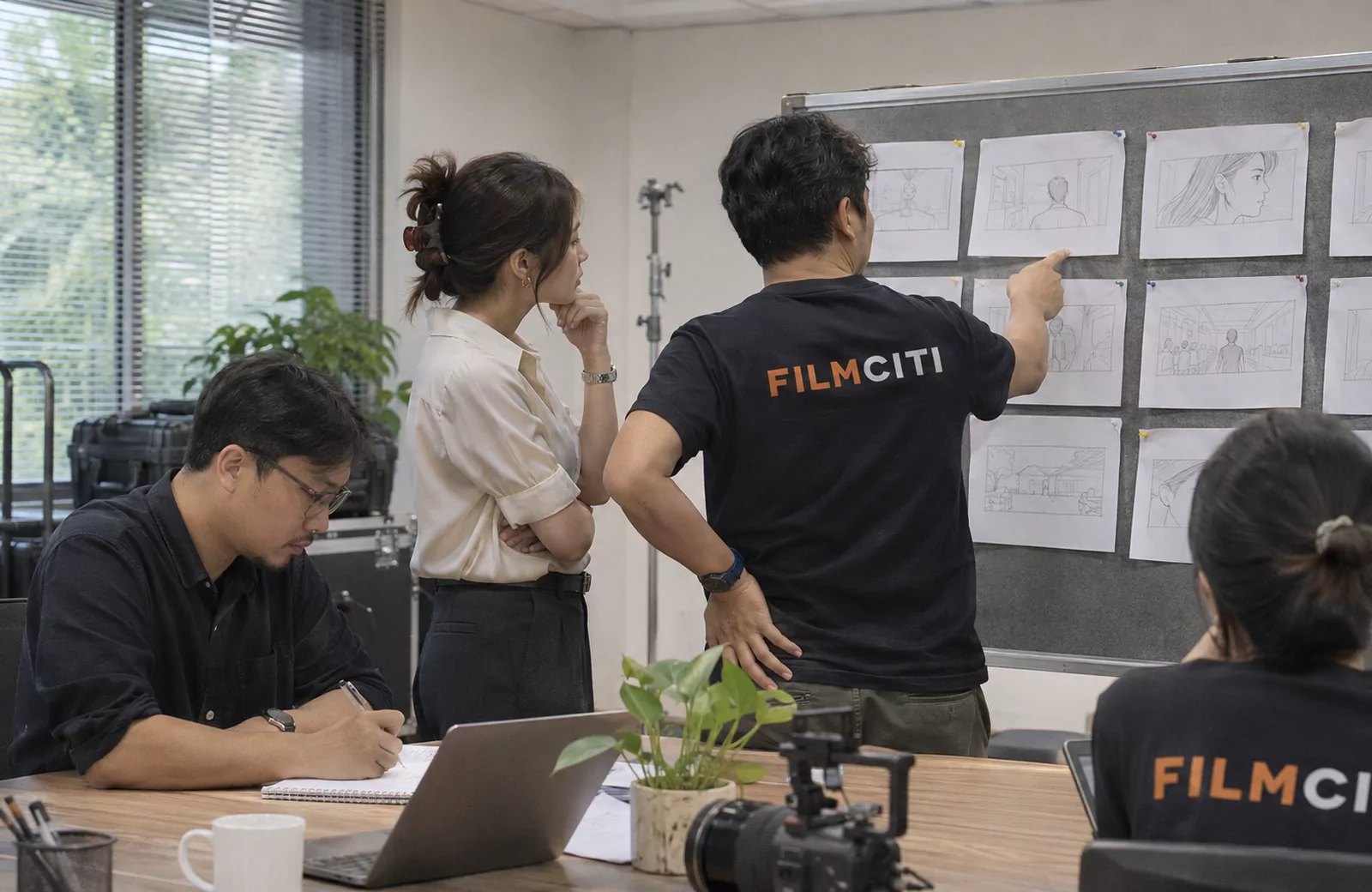
First, establish where the production house starts. Does the business already have an approved script, or only a purpose for the film? Are interviews to find material, background research, location recces or a visual approach needed?
This work does not appear on screen as a separate item, yet it decides what the crew needs to capture. Cutting pre-production without knowing who will take it on may simply shift the work to the person in charge at the business, without really reducing what the project needs. The reason is that every shot has to be decided in advance: who is filmed, where, what they say and which images illustrate it. If the crew does not recce the location or pre-interview the people on camera, the person in charge at the business ends up answering those questions alone, usually close to the shoot day. So when comparing 2 quotes, ask which one includes scriptwriting, the recce and pre-interviews, and which one assumes the business will prepare them itself.
Preparing the space, the visual direction and the filming schedule is the basis for keeping costs under control. The point here is to clarify the work before the shoot day, not to assume that the less preparation, the bigger the saving.
Filming conditions
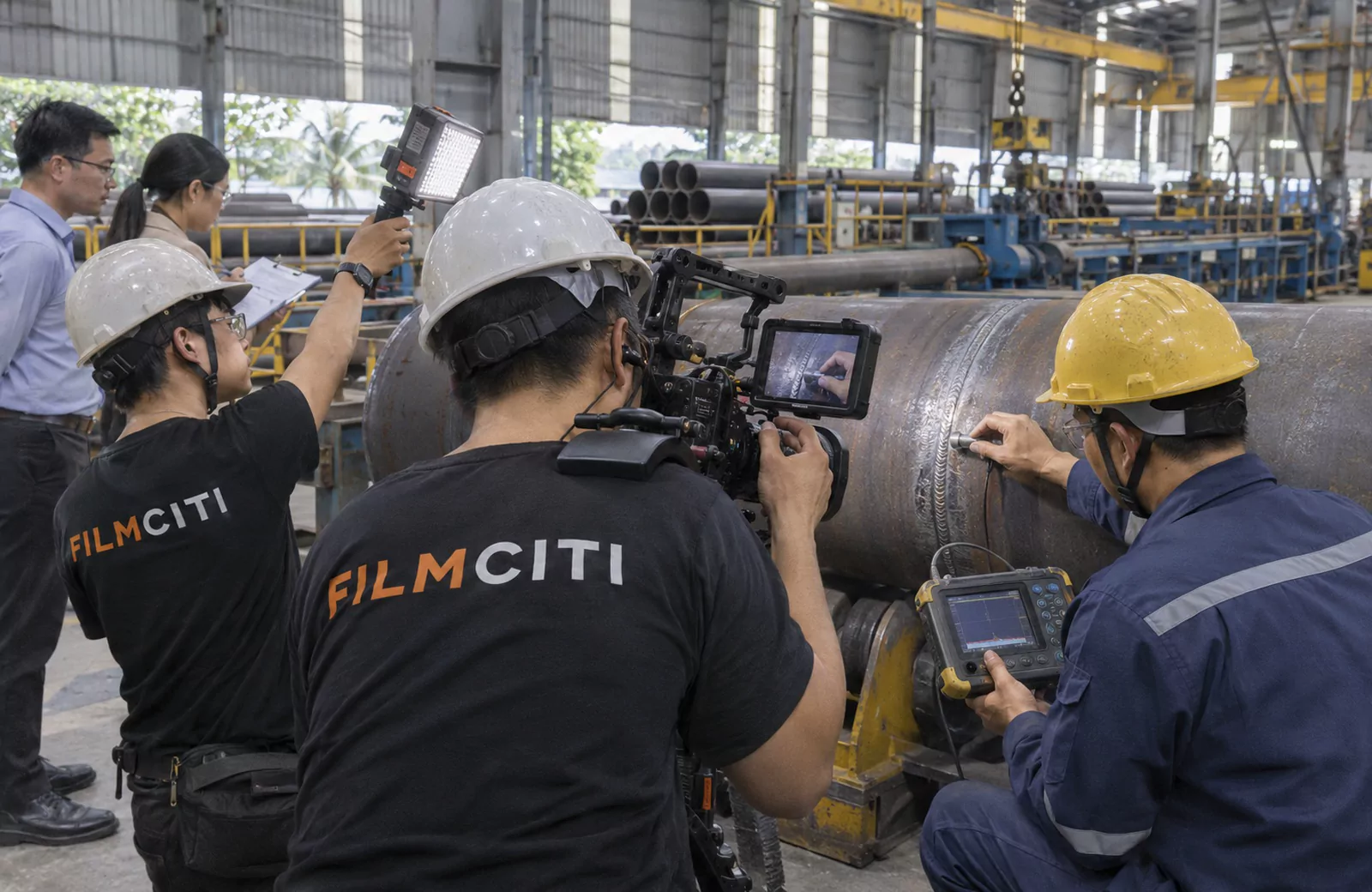
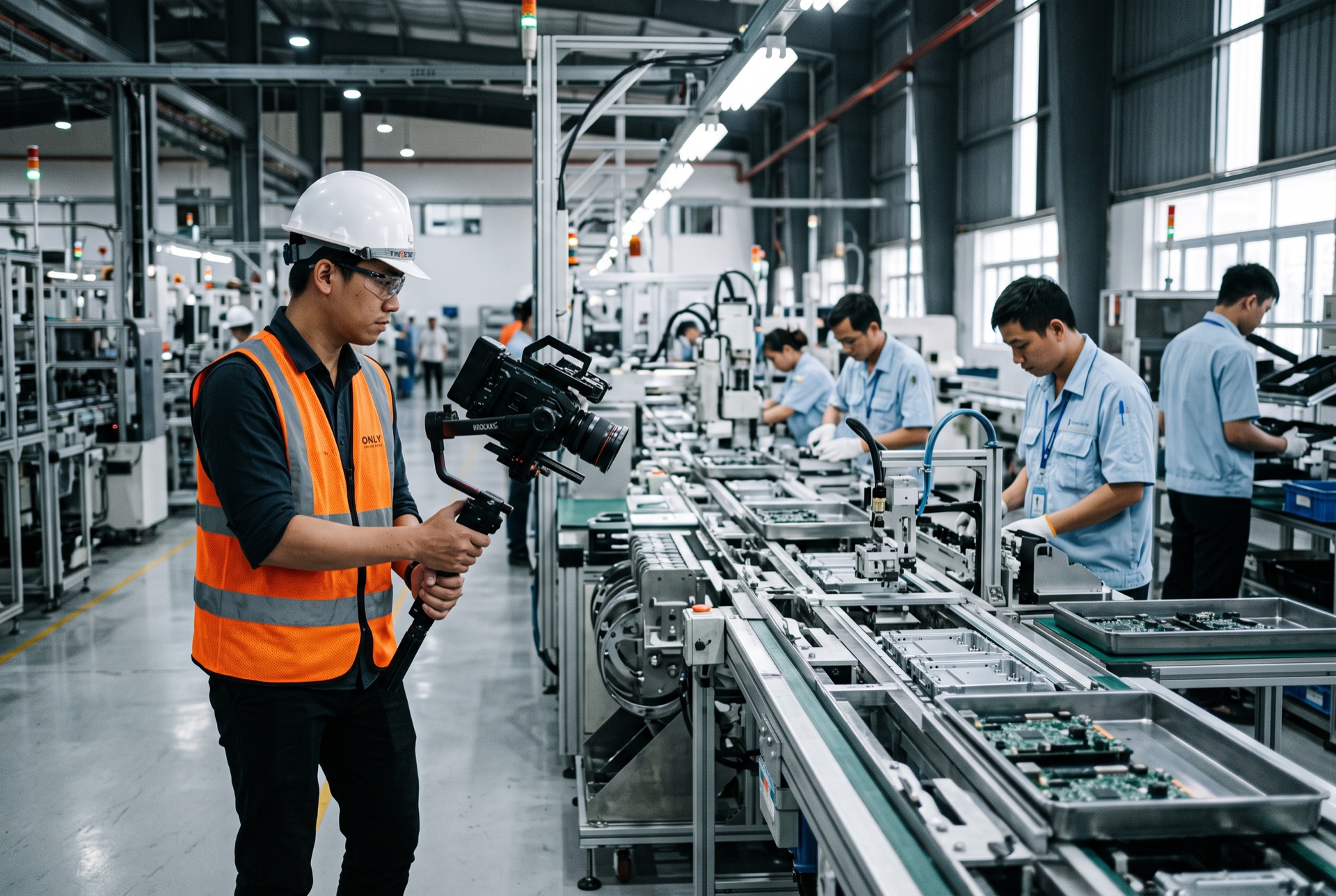
The number of locations, the schedule of the people on camera and access arrangements can all change how a shoot day is organised. Two rooms in the same headquarters do not necessarily have the same light, noise levels or availability. A production-line scene also needs to fit the factory's operating plan and rules. Every change of location means the crew has to strike, move and rebuild lights, cameras and sound equipment, so a shoot day across 3 places usually yields fewer usable shots than a day in 1 place. In a factory, the crew also has to clear entry procedures, put on protective gear and wait for the right shift to run the machines. In return, more locations let the film show the real scale of the business, so weigh which locations are essential to the story.
When reading a quote, find out which assumptions the estimated filming time is based on. If there has been no recce, which parts are provisional and when will they be confirmed? The answers help you avoid mistaking a proposed plan for an agreed scope.
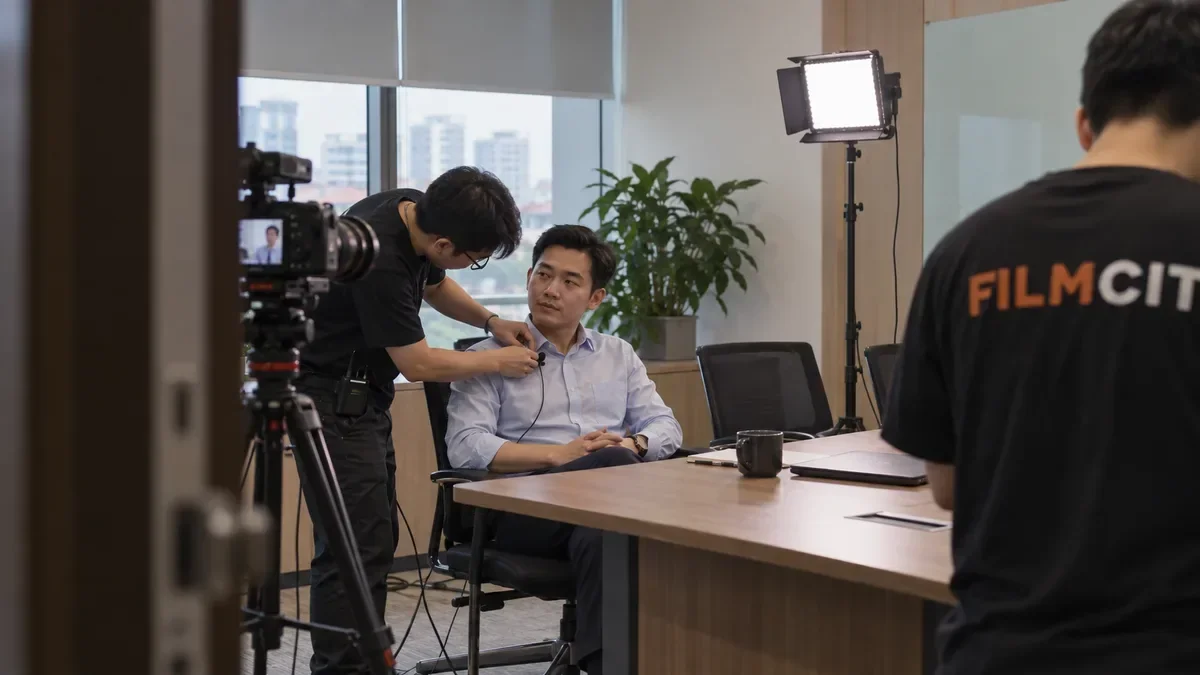
Who does the work and who appears on camera
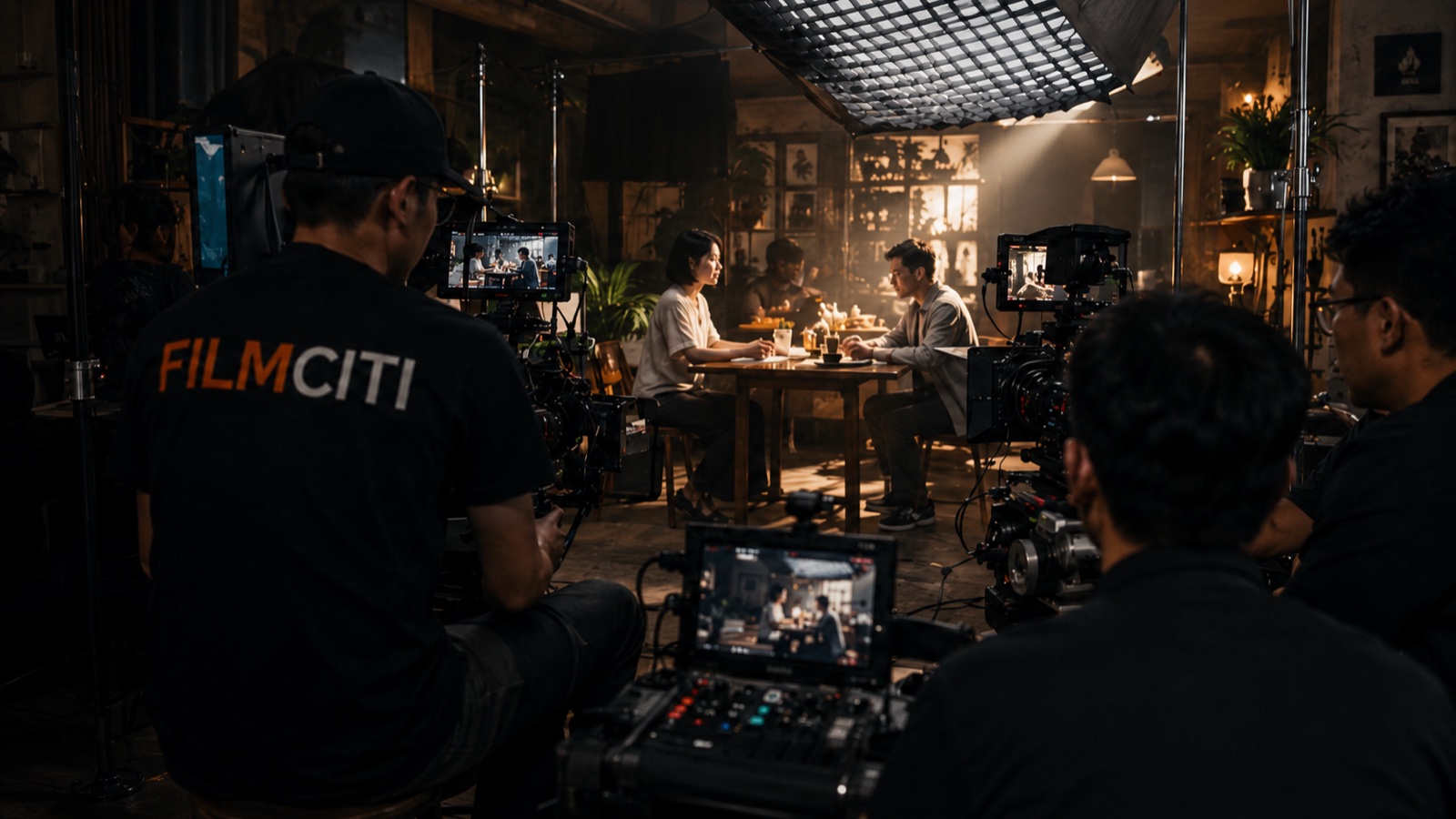
Look at crew in terms of the tasks each person covers. Who runs the set, who is responsible for the image, who controls the sound and who handles the preparation? How far does the business need to provide a contact, arrange participants or prepare the setting?
Company staff, leaders, presenters and actors each need different preparation. Do not assume that using in-house staff costs nothing: coordination time, content rehearsals and scheduling still need to be built into the plan.
Editing and finishing
"Editing" can cover very different work: selecting and arranging shots, sound treatment, voice-over recording, graphic design, colour grading, subtitles and exporting the versions needed.
Ask exactly what kind of graphics are proposed. Showing a figure on screen is different from explaining a process with motion graphics. Translated subtitles also need checking for names and terminology by someone with the right expertise.
The number of feedback rounds, the conditions for pick-up shoots and how changes after approval are handled must be made clear. This is the basis for telling an error that needs fixing apart from a new request, not a reason to refuse every piece of client feedback.
Deliverables and usage rights
A single main film does not necessarily cover every place it will be used. A website, a partner meeting, social media or an event screen may each need a different version in length, aspect ratio, language and subtitle presentation.
The usage rights for music, images and other assets also need checking against the agreement. Receiving a film file should not be taken to mean that every element in it can be used freely in every situation.
Filmciti hands over the source files to the client; the format and timing of delivery are set out in the contract. When commissioning, the business should still clarify the list of files and the conditions for reuse, rather than simply writing "source files delivered".
How should you send a request without an exact budget?
There is no single price that can be worked out from the sentence "make a company profile film". If you are still at the estimating stage, ask for options based on the scope of work and the budget you are willing to consider, together with the assumptions being used.
An initial request should include:
- The purpose of the film and its main audience.
- The date it is needed, and the planned venue or channel.
- The most important content to show.
- Existing material and what needs additional filming.
- Known locations, people on camera and access conditions.
- The versions you need, including languages and aspect ratios.
- The working contact and the person who approves the content.
- A budget limit or the options you want to compare.

Diagram of the information to clarify before comparing quotes.
Download the corporate film scope worksheet — Vietnamese template to fill in before sending your request. Items you do not yet know should be marked as to be confirmed, rather than filled with an assumption just to complete the form.
The person commissioning the film should also decide which support needs to be hired and what budget can be considered. Sharing a limit does not mean giving up the right to compare; it helps each party propose an option that can actually be delivered.
Reduce costs by making choices, not only by cutting rates
When an option exceeds what you can invest, ask to separate what you need now from what can be done later. You might reduce the number of locations, make use of footage that is still usable or prioritise one use first. Each choice should be weighed against the story and the level of quality the business wants.
Conversely, if one shoot day is dropped but every scene at several sites is still required, the need has not really shrunk. The production house should explain the alternative plan, the work that shifts to the business and the limitations that come with it.
On payment, Filmciti uses acceptance milestones agreed with the client; the number of milestones and their percentages are set out in the contract. Staged payments help with cash-flow planning, but they do not change the overall scope or automatically reduce production costs.
You can also read corporate filming prices by line item, extra costs after the budget is approved and Filmciti's corporate film production service to prepare questions that suit your project.
How much does a corporate film cost if the scope changes?
The price of a corporate film changes with the scope, so every item added or removed needs to be checked again against the content and the list of deliverables. When estimating a budget for a company profile, separate the main filming from additional needs such as extra locations, extra language versions or motion graphics. According to Filmciti's pricing page, the Starter package at VND 70 million and the Standard package at VND 100 million both cover 1 shoot day, while the Professional package at VND 200 million adds 1 standby day, a full cinema crew and a dolly and jib. So when the script needs another location or camera-movement equipment, the scope may move to a different package rather than simply gaining one extra line. Separating the costs this way helps both sides explain differences in terms of specific work.
The schedule also affects cost: the more urgent the project, the more the approval rounds need to be combined and the earlier the final approver needs to be involved, otherwise the crew has to hold people and equipment longer than planned. The business should therefore agree a working contact and the input conditions from the start; how to arrange the approval rounds is covered in 3 approval rounds for a corporate film.
If you need an estimate for your own project, you can send Filmciti a brief with the purpose of the film, the date it is needed, the material you already have, the versions you need and your budget limit, so a producer can propose an option that matches the scope.
Related articles
Related service: Corporate film production
FAQ
No, because running time is only one input and is not enough to set a price. You need to know the source of the images, the visual approach, the filming conditions and the list of deliverables. If a quote is calculated per minute, ask which work that rate includes and which assumptions it relies on.
You cannot tell from the total alone. The difference may come from scope, existing material, how the work is organised or the content approach. Read the assumptions and the exclusions before judging. If the scope is comparable, go on to look at delivery capability, how the team works with you and each party's responsibilities.
It can reduce the filming or searching required, if the footage is suitable in quality, content and usage rights. The production house needs to check it before confirming. Footage that lacks key scenes or cannot be reused may still need further editing, treatment or additional filming. A useful quote helps the business understand which work it is investing in. If differences remain that cannot be explained, clarify the scope before negotiating the total.