

TVC production: when should a business invest, and what does it need to prepare?
The board has just approved launching a new product line next quarter, and the request that lands on the marketing team's desk is a single line: "Make a TVC." Before you start looking for a TVC production company, it helps to know that a TVC is a very specific film format, made for a very specific way of being broadcast, rather than a general name for any promotional video. A business should invest in TVC production when it has a message that fits into one sentence and a media budget kept separate from the cost of making the film; before asking for a quote, it should prepare 6 groups of information, from objective and message to media plan and approvers. This article explains each condition, the 5 production stages and an illustrative 6-week schedule.
In this article
- A TVC is a short commercial made to be broadcast repeatedly on paid channels
- A business needs a TVC when it has a simple message and a large enough media plan
- TVC production puts most of its decisions into pre-production
- The business should prepare 6 groups of information before asking for a TVC quote
- Illustrative schedule: a 30-second TVC for a soft-drink brand launching a new flavour
- A 15-second version cannot always be cut from the 30-second version
- Checklist before deciding to produce a TVC
- Further reading
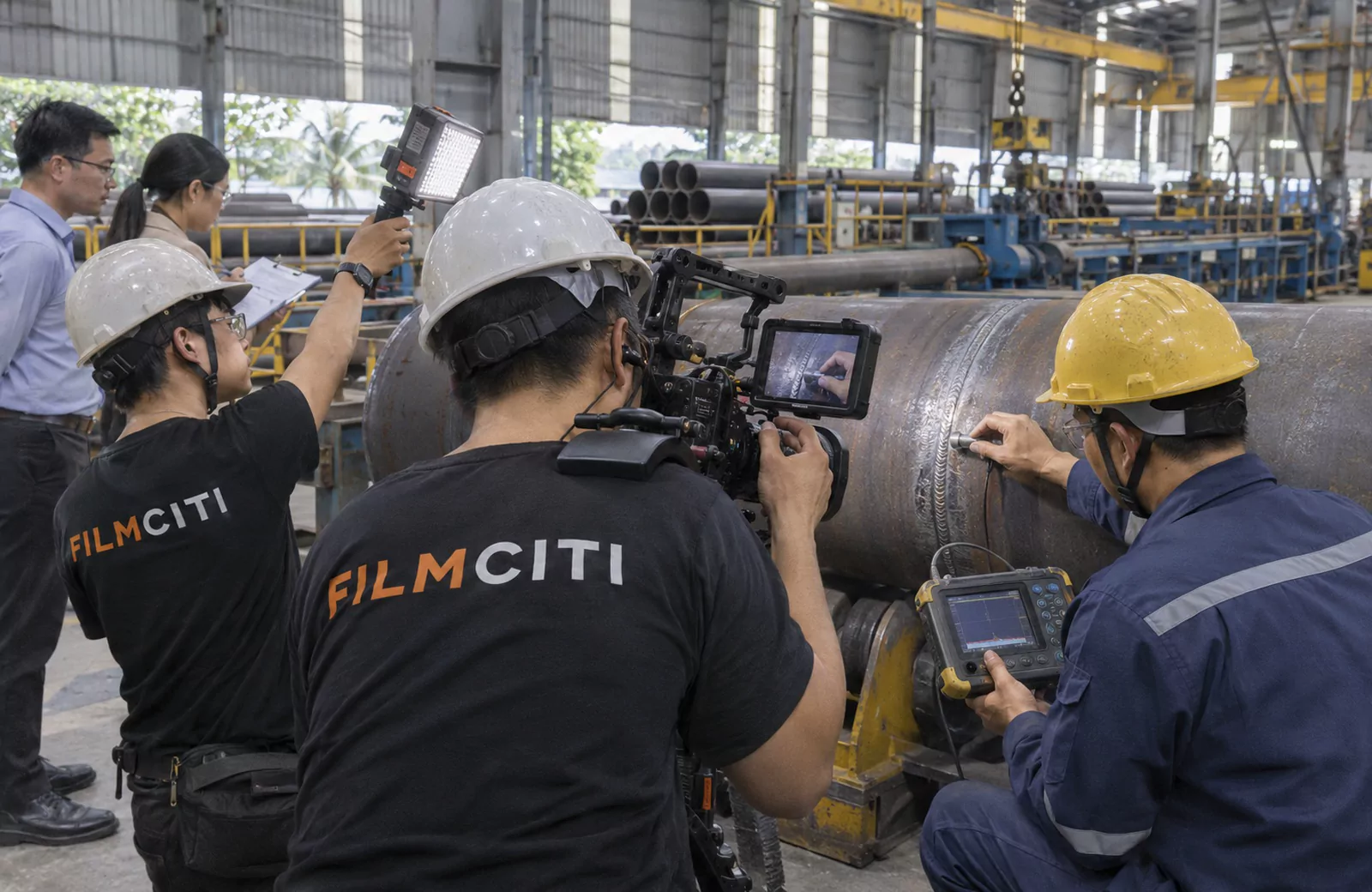
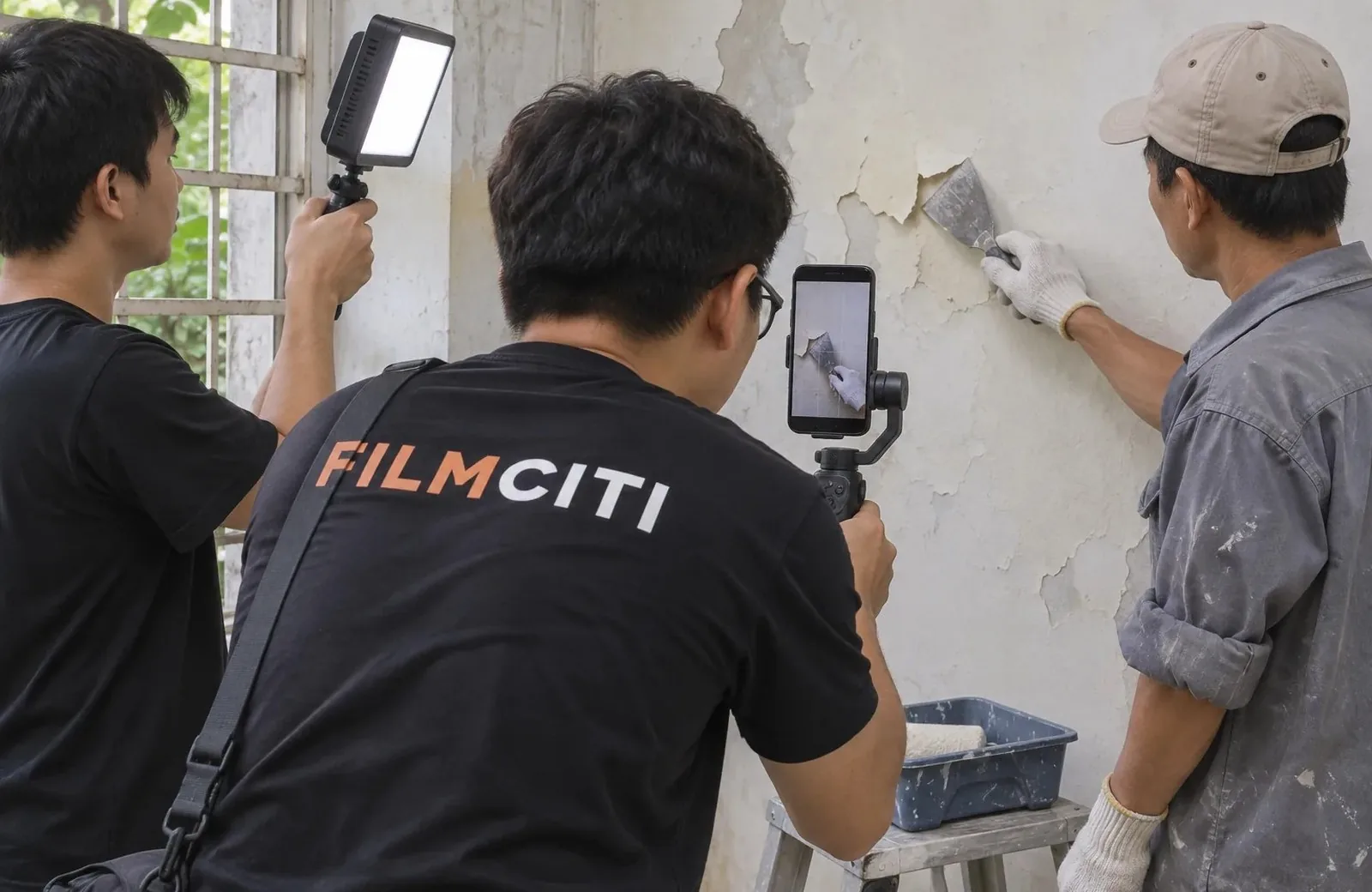
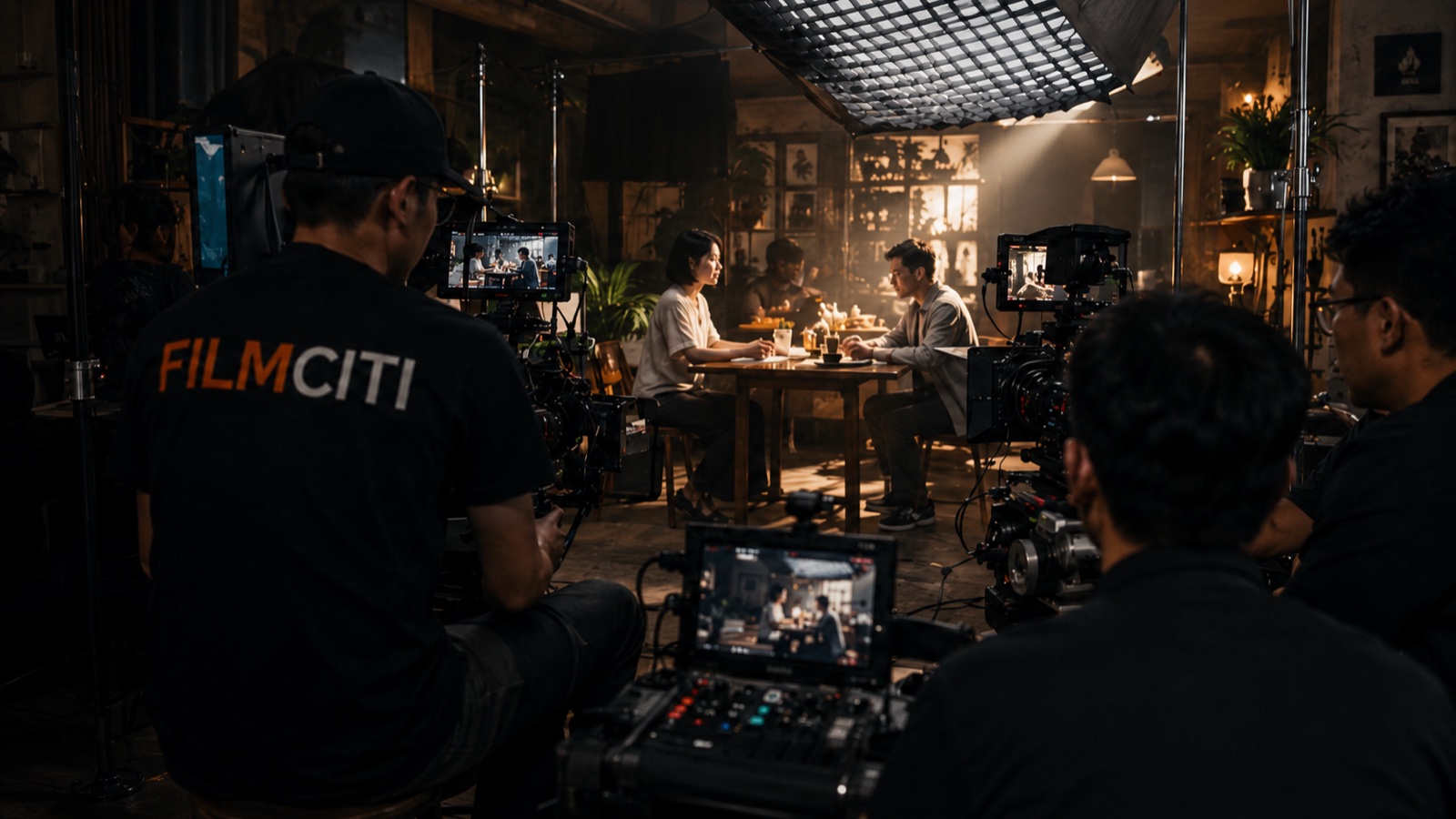
Illustration.
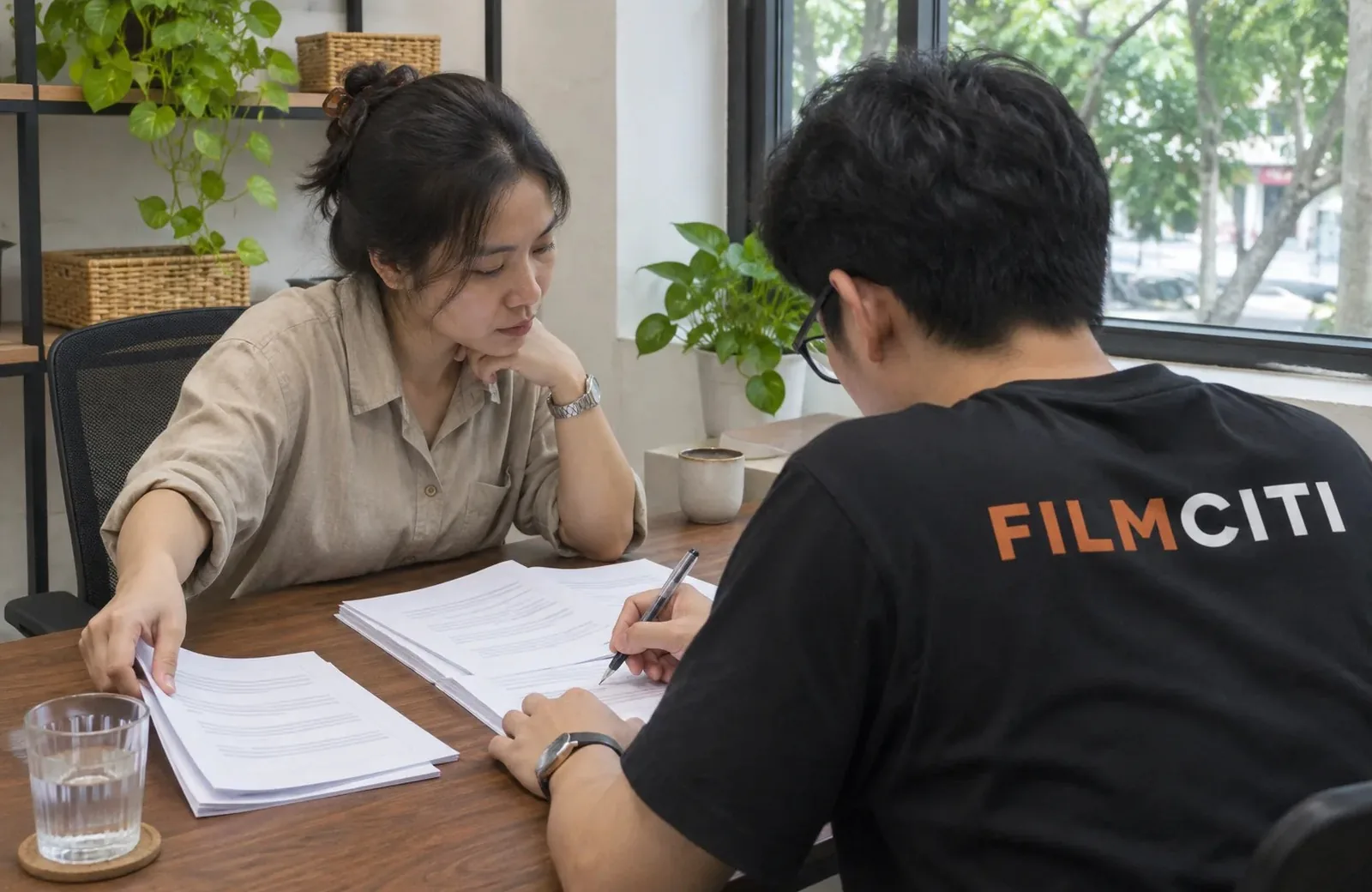
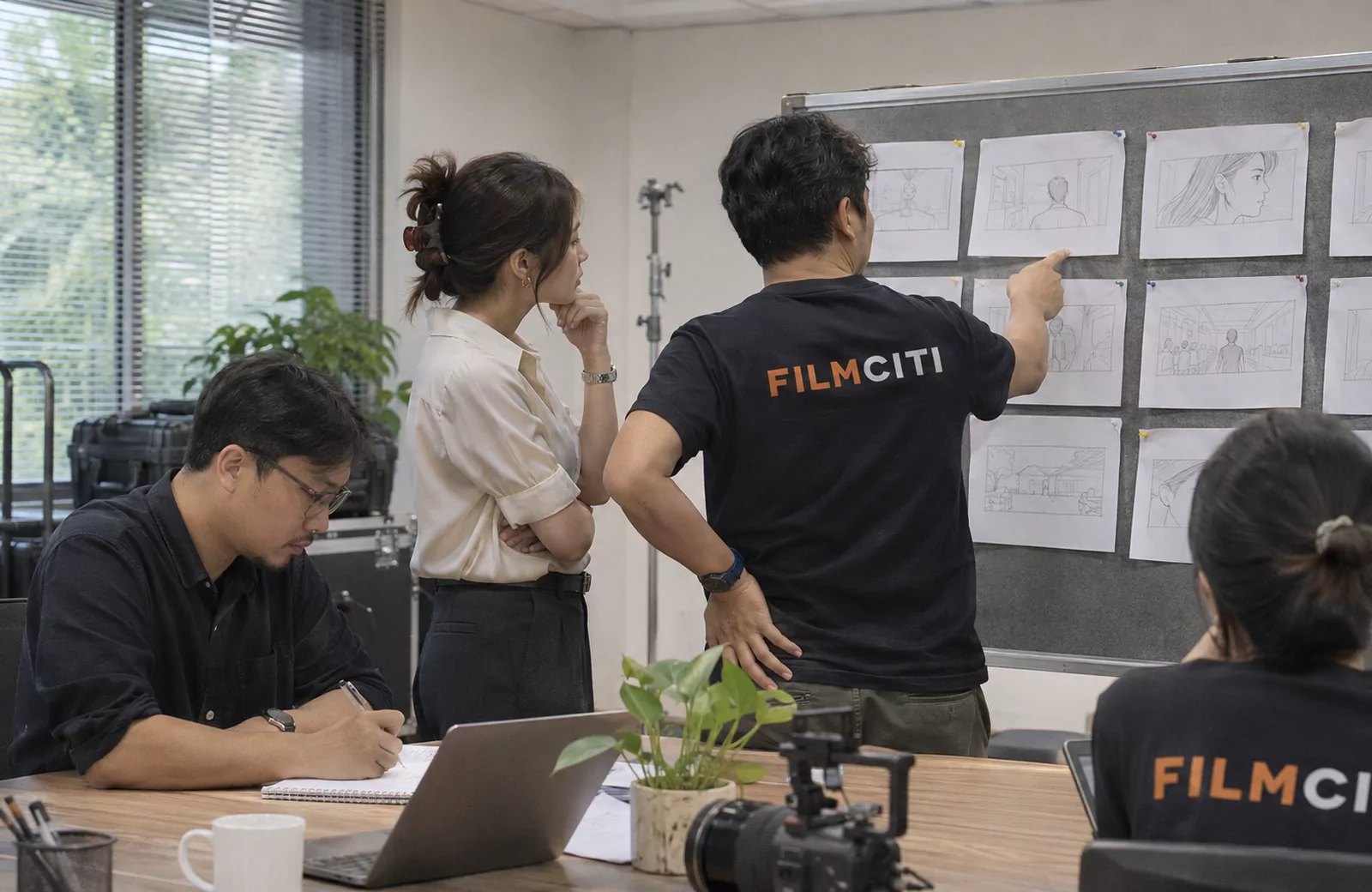
The director and the brand manager review the storyboard before the pre-production meeting.
A TVC is a short commercial made to be broadcast repeatedly on paid channels
A TVC (short for television commercial) is an advertising film, usually 15 or 30 seconds long, made to run in the advertising slots a business buys on television. Today the same film is also cut into iTVCs, the versions that run as ads on YouTube, Facebook or TikTok. What all these versions have in common is that viewers do not seek the film out; they come across it in the middle of whatever they are watching.
This way of being broadcast shapes the way the film is made. The business pays for every slot, and a campaign may show the same film to the same viewer dozens of times. So every second of a TVC is planned in advance: one single message, one memorable image, and a closing product shot (the packshot) clear enough for viewers to recognise the product on the shelf. TV airtime for advertising is also capped: under Vietnam's amended Law on Advertising No. 75/2025/QH15, in force since 1 January 2026, advertising on free-to-air channels may not exceed 10% of total daily broadcast time, and 5% on pay-TV channels. So the slots many brands want in peak season usually have to be booked early, and the production schedule needs to work backwards from the reserved on-air date.
A company film works differently. A 3-minute film shown at a trade fair or sent to partners is usually watched once, by people who already have a reason to care, so it has time to explain processes, capabilities and people. A series of short TikTok videos, on the other hand, needs volume and speed to test many content angles, rather than every video being carefully staged.
When you receive a request to "make a TVC", the first question to clarify is where the film will run, who will watch it, and whether the business will buy airtime or ad slots. If there is no paid channel yet, the business may well need a different format.
A business needs a TVC when it has a simple message and a large enough media plan
A TVC works when a business needs many people to learn one thing in a short time, such as a new product launch, a packaging change, a rebrand or a seasonal promotion. The conditions are that the message fits into one idea, the product has a difference that can be shown visually, and the business has a media budget separate from the production budget.
That last condition is often overlooked. The production cost only creates the film; the cost of buying slots is what puts the film in front of viewers. A carefully made TVC that only runs a few times on a fanpage will struggle to make more of a difference than a short video costing far less. To put this in proportion, on Filmciti's pricing page, TVC/iTVC is a category running 15–90 seconds, and the lowest all-in production package is VND 70 million (excluding VAT) for 1 shoot day; that figure covers only making the film. The media budget has to be worked out separately by channel, time slot and number of airings, so when presenting to management, put both figures forward together rather than leaving airtime for later.
In some cases a TVC is not yet the right choice. A steel pipe manufacturer selling to a few dozen large contractors needs to explain its production capacity and quality standards, so a company film will be more useful. A new cosmetics brand that does not yet know which message customers respond to can test several content angles with short videos first, and invest in a TVC once a message has been proven.
Before presenting the plan, you can answer 3 questions yourself: can the main message be said in one sentence; is there a media budget yet, and on which channels; and are the people who need to know about the product the mass market or just a small group of customers. If none of the 3 is clear yet, clarify them before booking a production schedule.
TVC production puts most of its decisions into pre-production
A 30-second TVC may need only 1–2 shoot days, but most of the work happens before the shoot. The process usually goes through 5 stages: agreeing the brief and scope; developing the concept and script; pre-production, including the director's treatment, storyboard, casting, location scouting, art direction and costume; the shoot; and post-production, including editing, colour grading, graphics, effects, sound and voice-over.
Pre-production ends with the pre-production meeting (PPM). At this meeting, the business, the director and the producer give final approval to everything that will appear on screen: cast, costumes, locations, props, product, voice-over script and shooting schedule. After the meeting, the crew starts renting equipment, building sets and confirming dates with the cast.
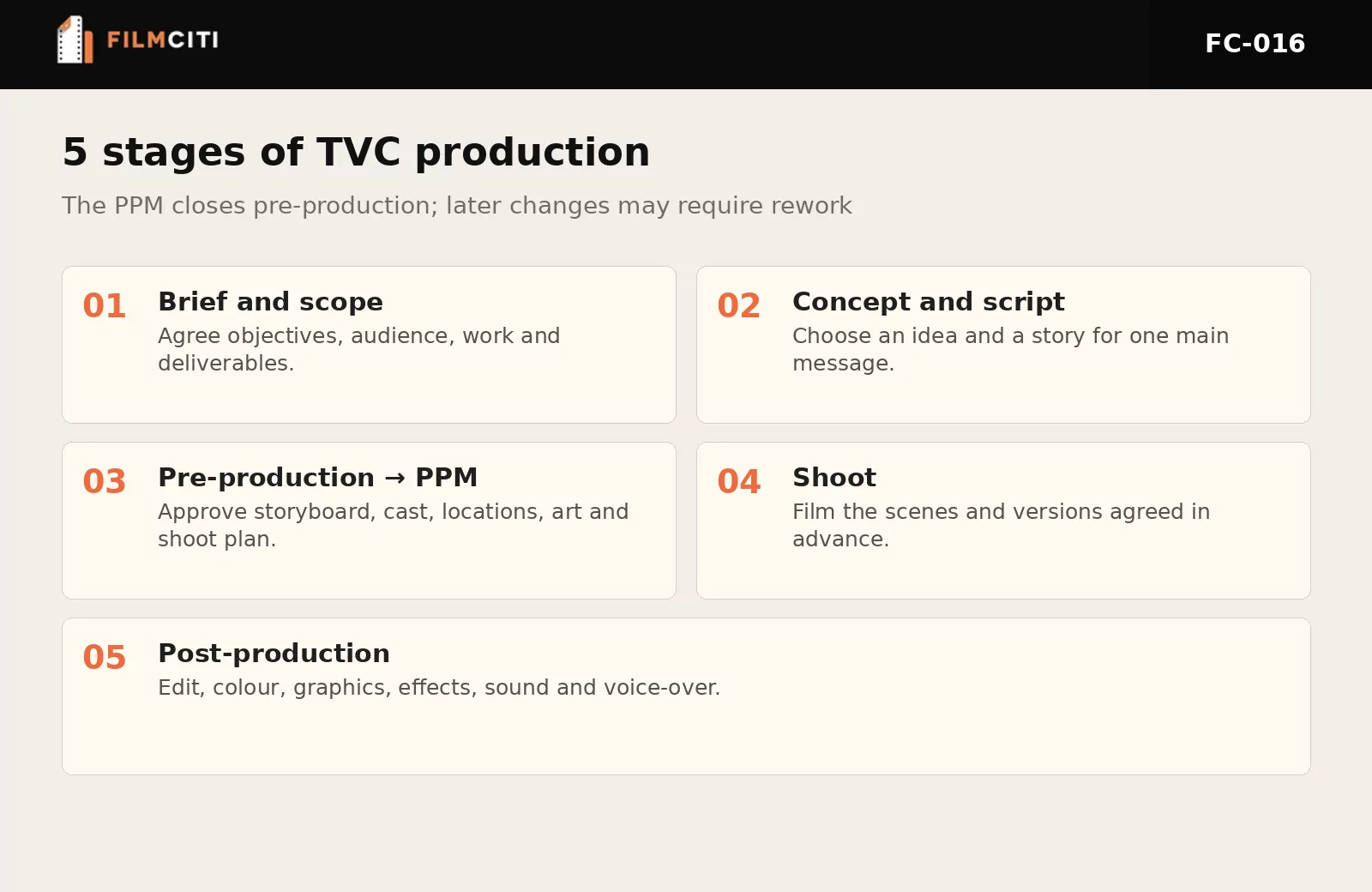
These stages depend closely on one another. Changing an actor after the shoot means reshooting every scene with that actor. Changing the slogan after the voice-over has been recorded means re-recording the voice, fixing the text graphics and remixing the sound. A change in pre-production usually costs a few extra hours of work on paper, while the same change after the shoot can force the crew to reshoot a whole day.
So spend the most time on the storyboard and the pre-production meeting, and invite the person with the final say to attend. If the final approver cannot be there, send them the minutes and reference images, and get written confirmation before the shoot.
The business should prepare 6 groups of information before asking for a TVC quote
A TVC quote depends on what the business puts into the brief. When information is missing, each production company fills the gaps with its own assumptions, and you get very different proposals for the same request. There are 6 groups of information you should prepare in advance.
The first group is objective and audience: is the film a launch or a brand reminder, and who are the viewers, in what situation. The second group is one main message, together with the reason viewers should believe it. The third group is the real product and the brand identity: final packaging, logo, brand colours and any rules on how the product must be shown.
The fourth group is the media plan: which channels, which durations, which versions are needed (30 seconds, 15 seconds, 6 seconds, vertical 9:16), the on-air date, and the period and channels for which the actors' images may be used. The fifth group is the legal requirements of the product category. For regulated categories such as medicines or health supplements, under current regulations the advertising content must be confirmed by the authorities before broadcast, so the legal team should read the script early. The sixth group is approvers and budget: who approves at each milestone, and the production budget range, kept separate from the media budget. With all of this in hand, the production company can work out how many approval rounds are needed and build them into the schedule from the start.
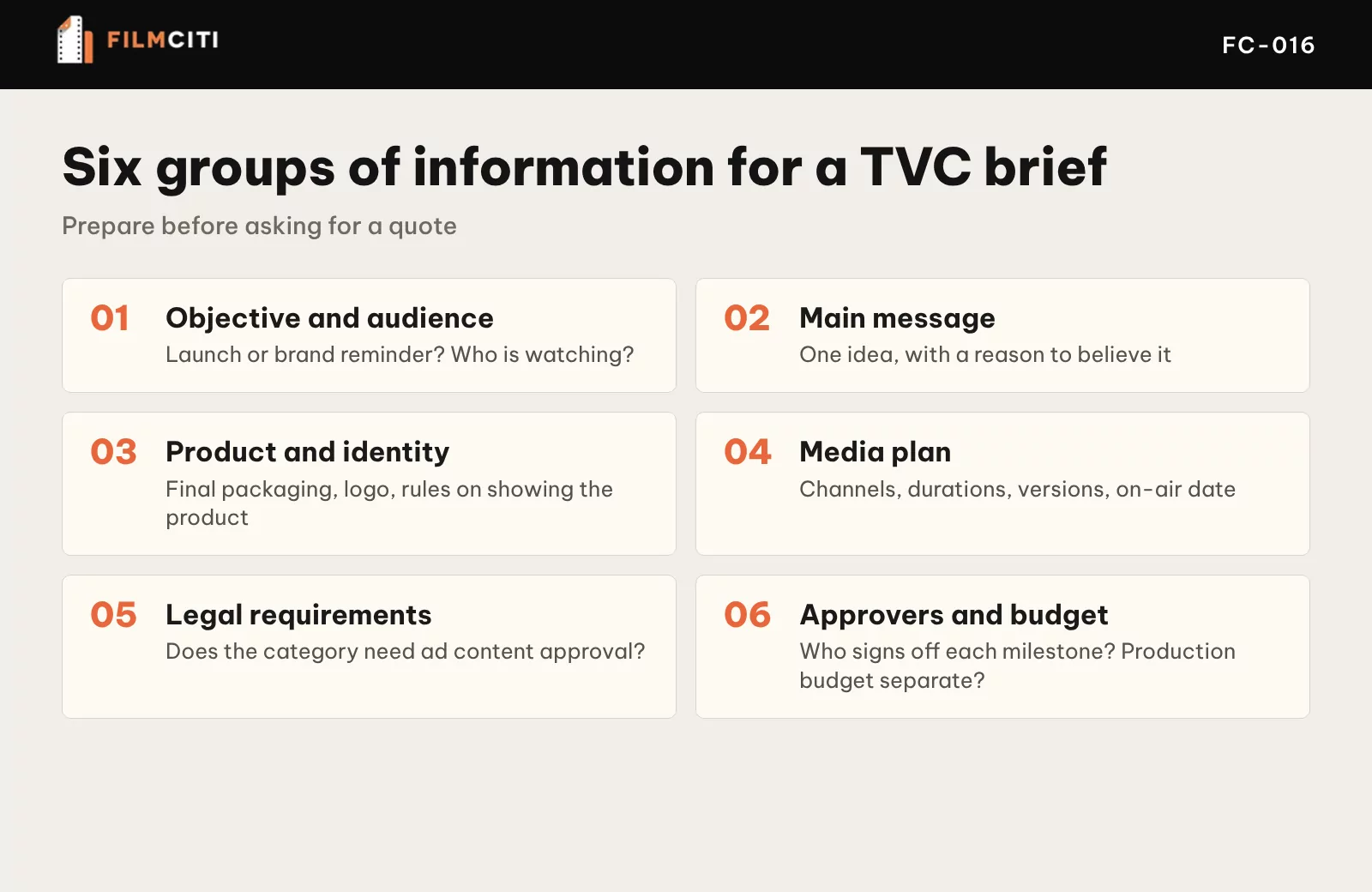
Not every group has to be complete from the start. If there is no idea yet, the business can ask the production company or an agency to develop the concept. However, the media plan and on-air date should be fixed as early as possible, because they are the basis for the crew to work out how many versions to shoot and to plan the schedule backwards from the broadcast date.
Illustrative schedule: a 30-second TVC for a soft-drink brand launching a new flavour
The brief: a soft-drink brand needs a 30-second TVC to launch a new flavour, plus a 15-second version, a 6-second version and a vertical 9:16 version for social media. The concept has been approved. The film is shot over 1 day in a studio and 1 day on location, with 2 lead actors. The table below breaks the schedule into 6 weeks, with the main work and the approver for each week.
| Week | Main work | Who approves |
|---|---|---|
| Week 1 | Director's treatment, storyboard, location list | Marketing manager approves the creative direction |
| Week 2 | Casting, location scouting, art direction and costume design | The business picks the cast from a shortlist |
| Week 3 | Pre-production meeting, studio set build, preparing product for the shoot | Final approver confirms the meeting minutes |
| Week 4 | 2 shoot days, first offline edit | The business gives feedback on the rough cut |
| Week 5 | Colour grading, graphics, voice-over, music and sound mix | Approval of the finished 30-second version |
| Week 6 | Cutting the 15-second, 6-second and 9:16 versions, exporting files to each channel's specs | Approval and delivery |
In this schedule, the shoot takes up only 2 days, while most of the remaining weeks go to preparation, approvals and post-production. The schedule also holds only when every approval milestone is answered on time; each time feedback comes in a few days late, the later steps slip with it.
The twist: at the end of week 2, the printer reports that the new-flavour packaging will arrive 10 days late, which means the crew will only have printed mock-ups on the shoot day. There are 3 ways to handle this:
- Shoot on schedule with the mock-up packaging, then replace the label in post-production. The broadcast date is kept, but graphics costs rise, and the crew has to limit angles that rotate the bottle or hold the label close.
- Shoot the scenes with actors on schedule, and shoot the closing packshot separately once the real packaging arrives. This needs an extra small product shoot in the studio, and post-production time gets squeezed.
- Push the whole shoot back to the packaging delivery date. The product looks exactly right, but the on-air date slips, and the business may have to rebook the slots it has already reserved.
A 15-second version cannot always be cut from the 30-second version
In early December 2025, a nut-milk company in Ho Chi Minh City decides to make a 30-second TVC for its Tết range, going on air on 10 January 2026. Ms Mai, the marketing manager, picks the production company first, while the board is still choosing a media-buying agency. She messages the crew: "Let's make the film first so we're ready for Tết, we'll sort out the media buying later."
The concept is approved quickly: a grandmother wrapping bánh chưng, her grandchild running in with a carton of nut milk, the whole family gathering round. The shot of the grandmother wrapping the cake lasts 8 seconds, with afternoon sunlight falling through the window, and everyone who sees the edit loves it. The file "TVC_30s_v5_final" is approved on 28 December 2025.
On 2 January 2026, the media agency sends its media plan. In the table, 70% of the slots are the 15-second version on TV and the 6-second version on YouTube; only 30% are the 30-second version.
Ms Mai messages the crew: "Can you cut me a 15-second and a 6-second version? Just make it shorter."
The crew tries and finds that the 15-second version has only two options. If they keep the grandmother's scene, there is only time left to show the logo; if they drop it, the story loses its emotional core and is left with just the grandchild holding the carton. The voice-over was written and recorded for a 30-second rhythm, so its sentences cannot be cut in half. To make a proper 15-second version, the crew would have to rewrite the voice-over, re-record it and shoot a few extra short scenes. Meanwhile, the actress playing the grandmother has taken another job until after 10 January.
In the end, the 15-second version is re-edited around the scene of the family raising their cartons to wish each other a happy new year, using leftover footage and a newly recorded voice-over. It makes it to air, but 5 days later than planned, right in the peak Tết shopping week. The 6-second version is left with just the shot of the carton being raised and the logo, enough for a YouTube ad but with no story left.
Ms Mai did not have the media plan in hand when she approved the script, because the agency was being chosen in parallel, so her decision to make the film first had a clear reason. The production crew also fell short: treating the media plan as the media agency's business, it never asked which versions would be broadcast, and so it did not propose shooting a few short scenes for the 15-second version on the shoot day, while the cast and set were still there.
What needed to be settled at the briefing, before the concept itself, was: "Which versions will the film run in, how long is each, and which one takes the most slots?"
The story above is a hypothetical situation, reconstructed from things that often happen in corporate filmmaking.
With the Filmciti crew, we ask for the media plan and the list of versions to be delivered at the briefing, even when the business has not yet chosen its media-buying agency. If that is still uncertain, we mark short scenes for the 15-second and 6-second versions separately in the shot list and shoot them on the main shoot day, while the cast and set are still in the studio.
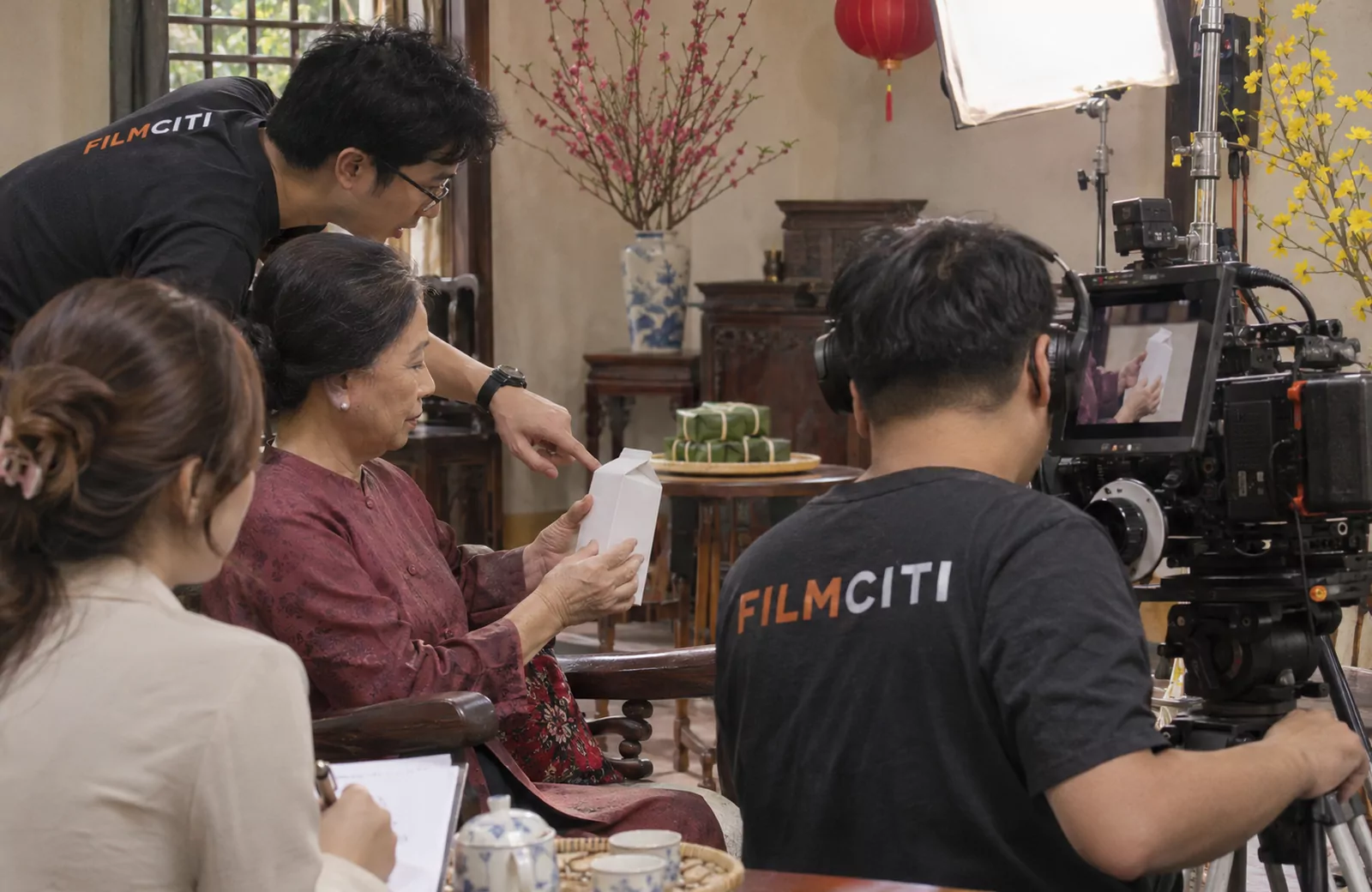
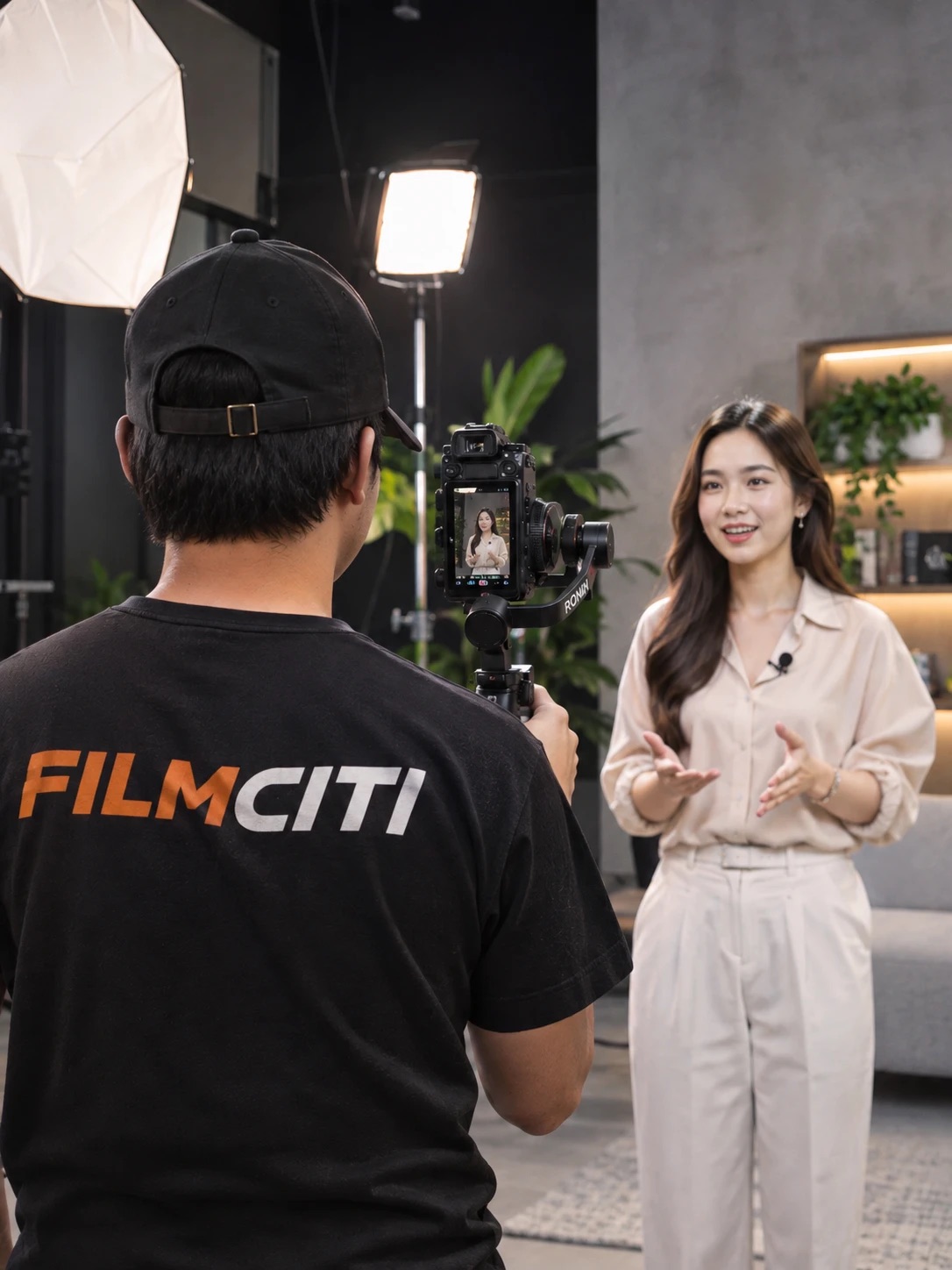
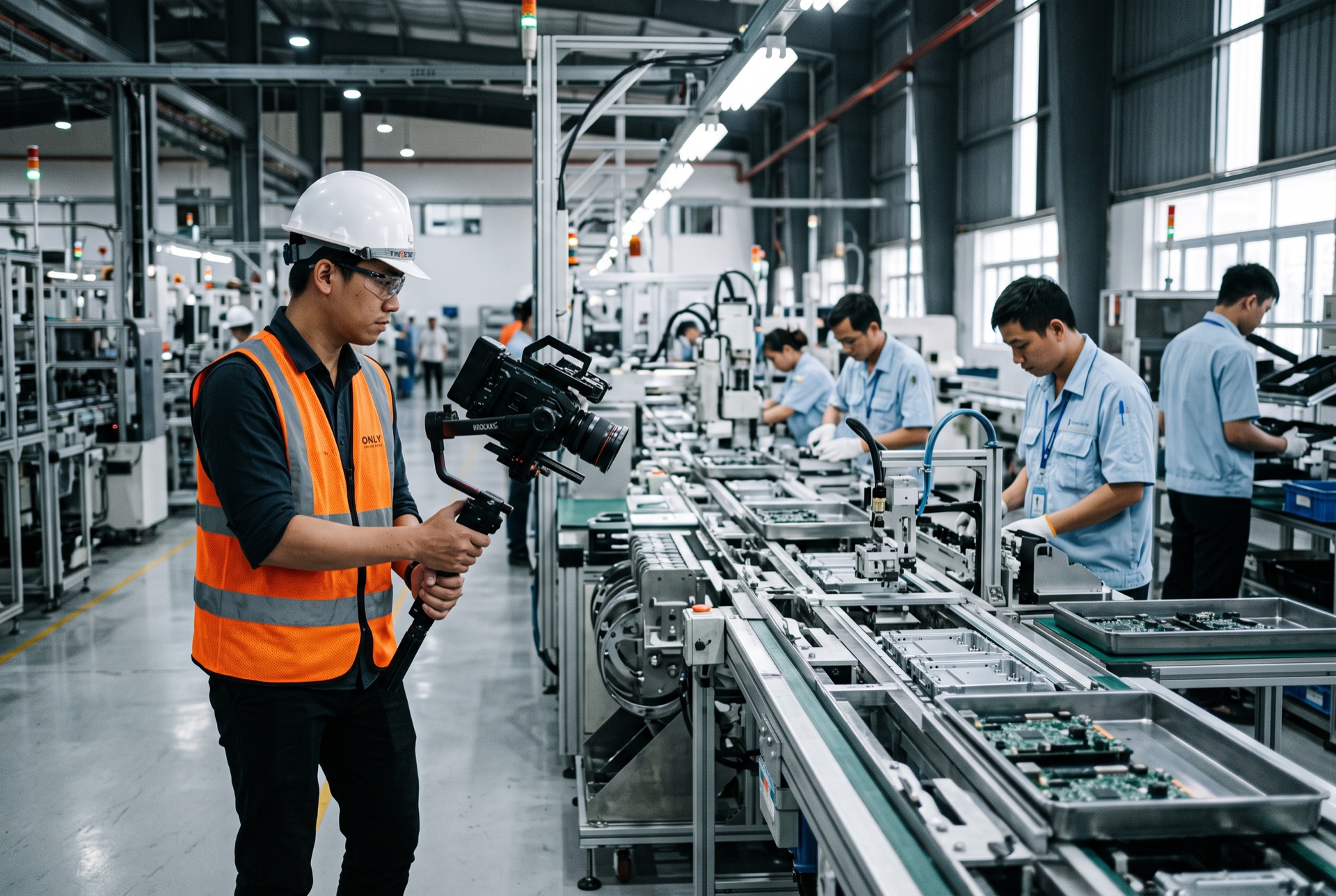
Illustration.
Shooting short scenes for the 15-second version on the shoot day, while the cast and set are still in the studio.
Checklist before deciding to produce a TVC
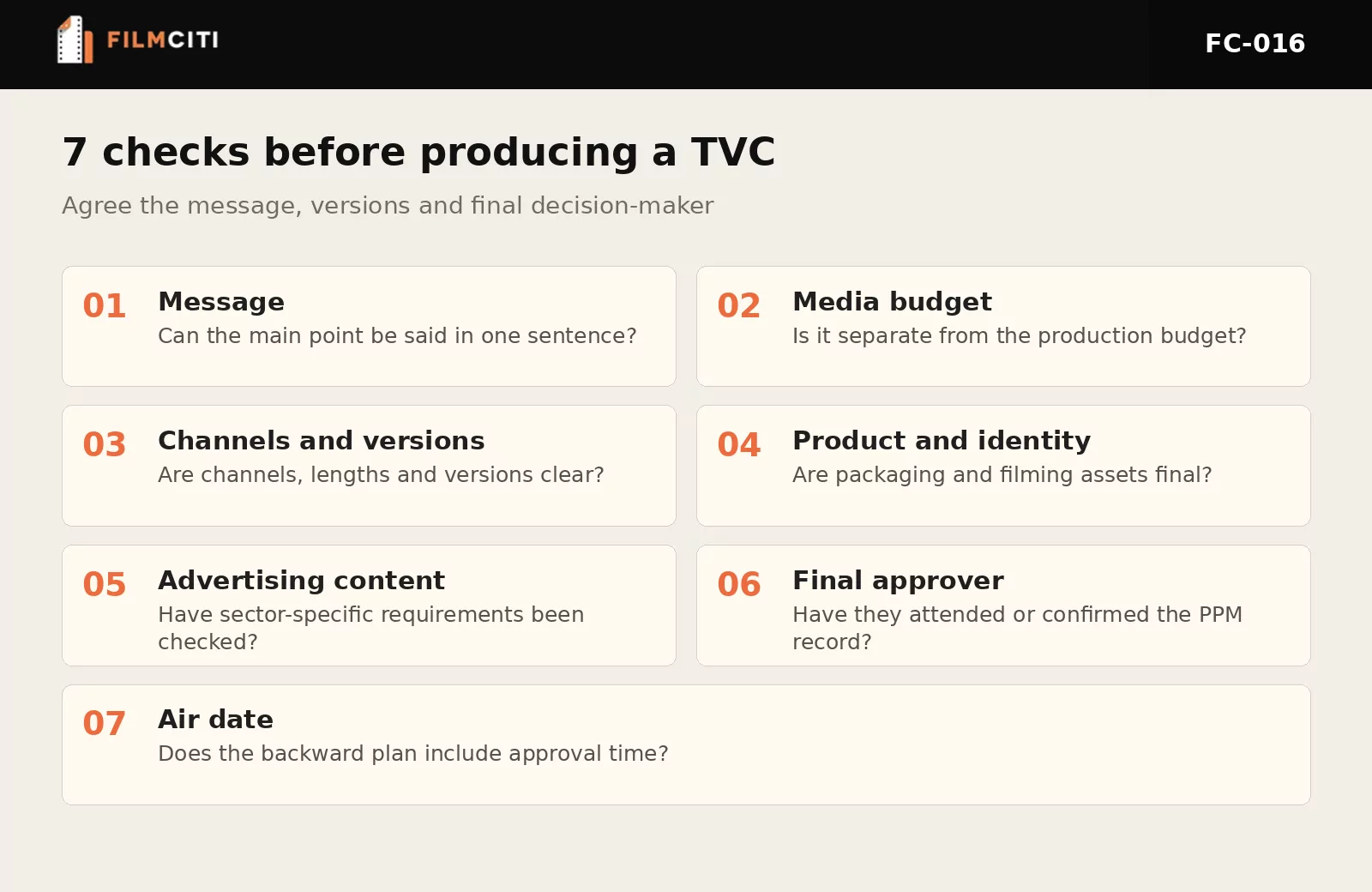
- Can the film's main message be said in one sentence?
- Does the business have a media budget separate from the production budget?
- Do you know which channels the film will run on, and which durations and versions are needed?
- Are the packaging, product and brand identity used for the shoot final?
- Does your product category need advertising content to be confirmed before broadcast?
- Has the final approver been invited to attend the pre-production meeting, or to confirm its minutes?
- Has the production schedule been worked backwards from the on-air date, including approval time?
Ask the production company again if the quote only says "30-second TVC" without stating the number of shoot days, the number of actors, the versions to be delivered and the period for using the actors' images, or if the proposed schedule has no pre-production meeting before the shoot.
Download the TVC brief template with 6 information groups — Vietnamese template to complete the key information before requesting quotes, with a sheet for versions and media channels.
Further reading
- TVC production quotes: the costs behind a 30-second commercial
- Choosing an advertising film format by communication goal
- Filmciti's TVC and iTVC production service: pre-production, production, post-production and delivery versions.
If your business is considering a TVC, send Filmciti a brief with the product to be featured, the main message, the on-air date, the planned channels and the versions you need. Filmciti's producer will work with you to decide whether a TVC is the right choice, then propose a matching scope and production schedule.
Related service: TVC / iTVC production
FAQ
A TVC is the version broadcast on television, while an iTVC is the version that runs as an ad on online platforms. The two are usually made from the same shoot, but an iTVC may need an extra vertical frame, subtitles and a shorter opening to suit the way people scroll on their phones. If the film will only run online, the business may need only an iTVC.
It depends on whether the concept already exists, the number of locations and actors, the amount of post-production and how quickly the business approves. The shoot itself usually takes only 1–2 days; most of the time goes to pre- and post-production, so ask the production company to plan the schedule backwards from the on-air date.
Yes. The production company or an agency can develop a concept from the brief, as long as the business is clear about the objective, the audience and the main message. In that case, the schedule needs extra time for rounds of presenting and approving ideas before pre-production starts.