
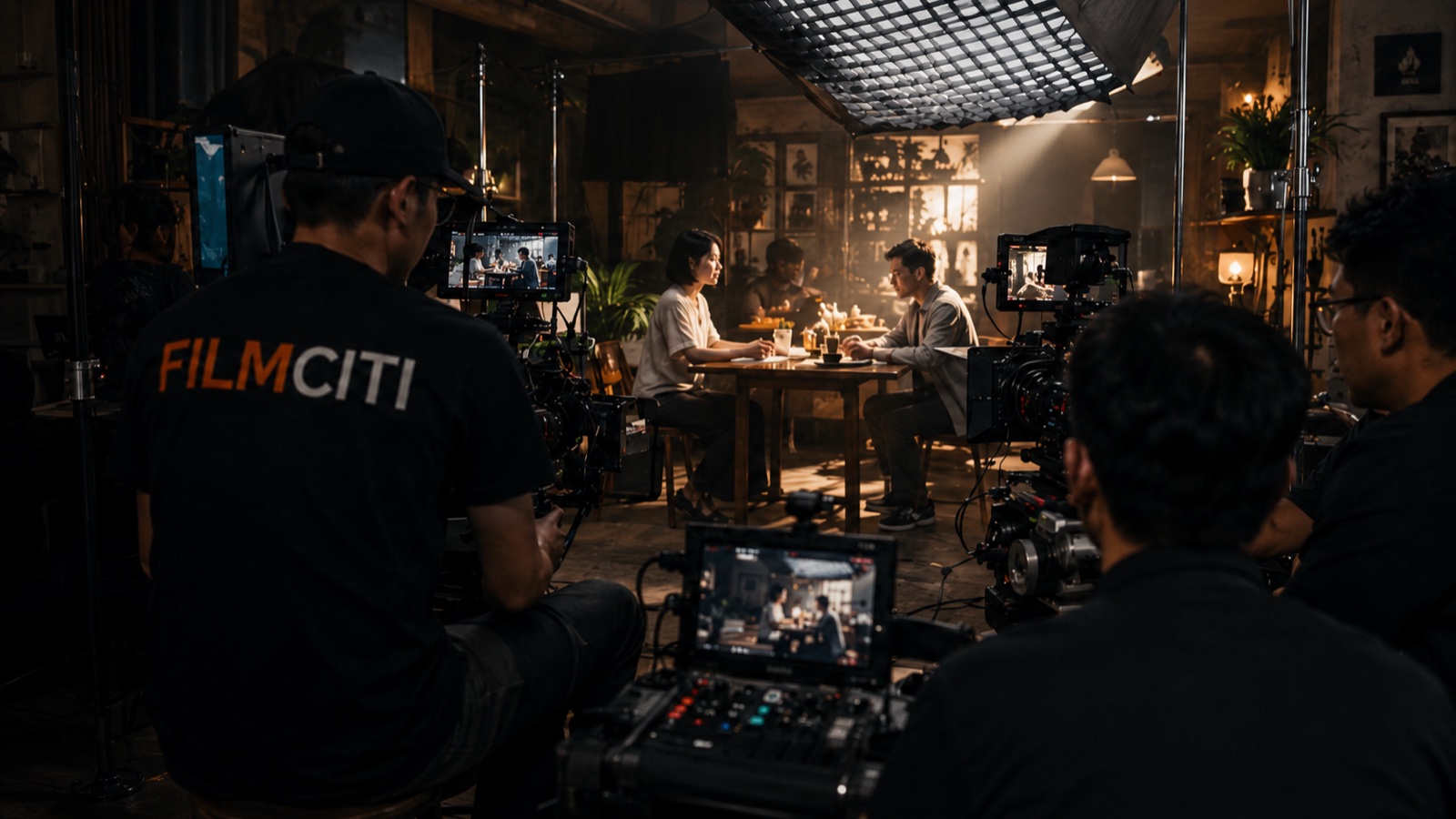


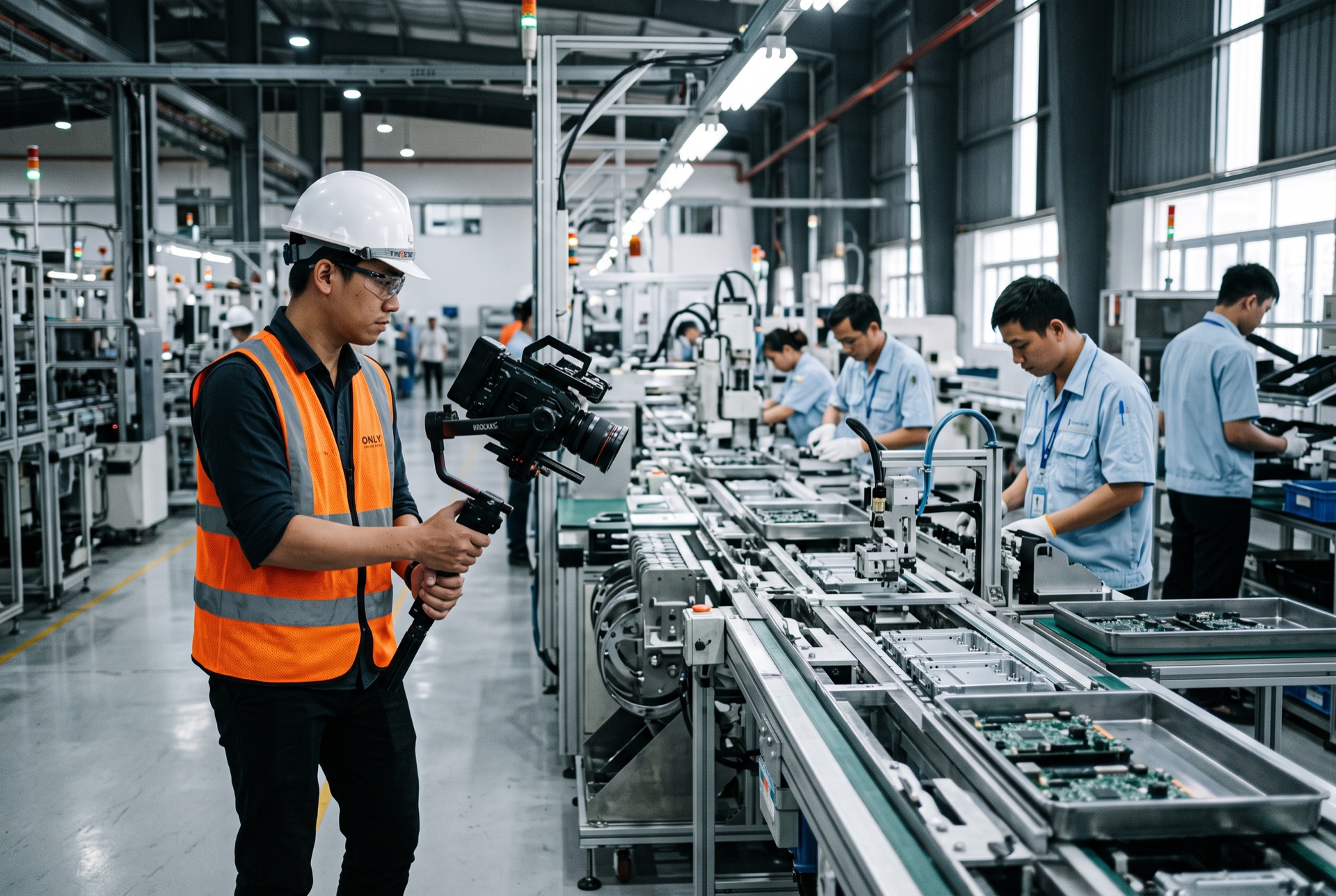
What is a corporate video? Should you choose an introduction film or an advert?
From the same factory, a film for distributors needs to explain how quality is controlled, while a product advert needs to give buyers a reason to choose. So before asking what a corporate video is, identify what decision the viewer is facing: learning about a company's capabilities, considering a product or choosing a place to work.

In this article
Genre names help both sides talk to each other, but they are not enough to choose a production approach. A film is worth making when it has a clear job, suitable evidence and a place where its intended viewers will actually watch it.
Introduction films and adverts differ first in what they need to persuade
A corporate video is a group of films that introduce an organisation, its activities or an issue the organisation needs to communicate. The group is broad: capability films, recruitment films, internal films and films for partners all belong to it.
So the question “what is a corporate video for” needs to be answered with a specific job. “So that everyone understands the company” is too broad; “help a new partner understand our production capacity and way of working” already points to the material to look for.
A corporate introduction film differs from a TVC mainly in its job and viewing context, not only in its length. An introduction film is usually watched by choice, in a meeting, on a website or as part of a company profile. A TVC has to hold someone who is scrolling a phone or watching between other content, so it needs a reason to keep watching from the very first seconds.
Mr Phong's company had just finished a 7-minute introduction film. It opened with a spinning 3D logo, followed by the line “Founded in 2005” and a welcome from the chairman. Shown at the customer conference, it looked very formal and everyone praised it.
The following week, Mr Phong told the marketing team to run the whole film as a Facebook ad: “This year's film budget is used up, let's make the most of it.” After 1 week, the report showed that most viewers left within the first 3 seconds, right while the logo was still spinning.
Mr Phong instructed: “Then cut it down to 1 minute.” The 1-minute version went live, still opening with the spinning logo and “Founded in 2005”, because that was the part he liked best.
By the end of the month, the ad had exactly one comment: “Hi admin, is the company still hiring accountants?”
Here, nobody did anything wrong: the introduction film was made correctly for the conference, and the marketing team ran it exactly as instructed. It was simply one film given 2 different jobs for 2 different kinds of viewers.
The production crew also had a question it should have asked earlier. When a client says “once it is done, we will use it for many things”, the producer needs to ask during pre-production: will it run as an ad, on which channel, in which frame format? If so, the crew should film extra product shots and write a separate script for the ad version during the same shoot.
The question that should have been asked at the start: “Where will this film be watched, and how many seconds will viewers give it?”
The story above is a hypothetical situation, reconstructed from things that often happen in corporate filmmaking.
Choose the type of film by the viewer's question, then choose the running time
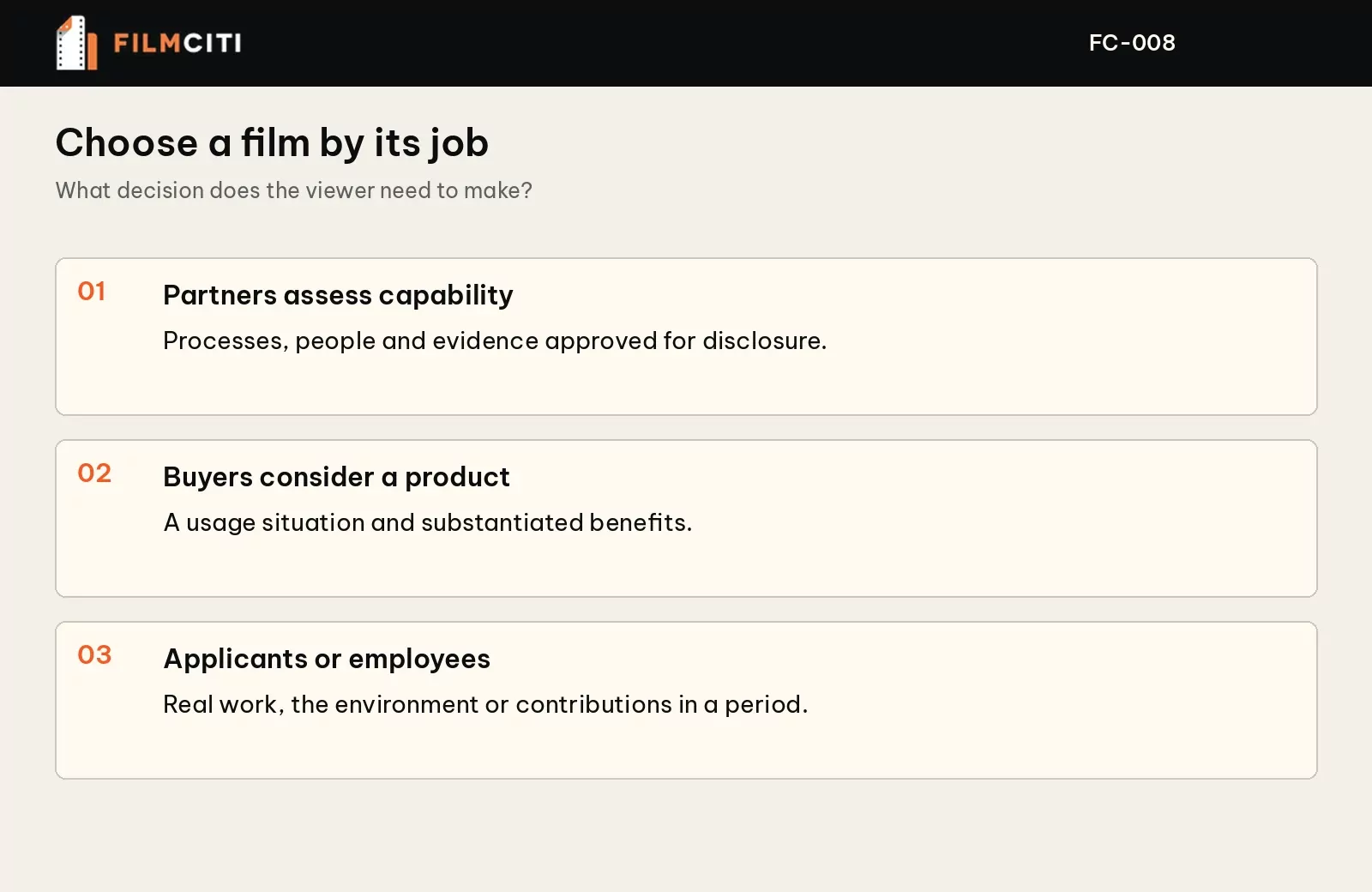
If you are asking what types of corporate video exist, the table below is a starting point. The names can overlap; use the “evidence” column to check whether a proposal really serves its job.
| Task | Possible format | Priority evidence |
|---|---|---|
| Help a partner assess cooperation | Capability film or corporate introduction | Processes, people and capabilities approved for disclosure |
| Help a buyer consider a product | Advert, product film or explainer | Usage situation and substantiated benefits |
| Help applicants picture the role | Recruitment or culture film | Real work, the environment and relevant accounts |
| Help employees reflect on a period | Year-end film | Events, archive material and contributions during that period |
Filmciti's price list currently publishes 2 groups: corporate films of 3–10 minutes and TVC/iTVC of 15–90 seconds. That is the scope of the service, not a reason to assume a long film by default: the final running time must be just enough for the story and suit the place where it is shown.
The viewing context also determines how the story is told. A film played at a trade-fair stand, where the neighbouring stands' speakers are loud, cannot rely on narration; the key information should sit in on-screen text and in sequences that make sense even when watched from the middle. A film sent to partners by email is the opposite: it can rely much more on the account of the person in charge.
A public example: in 2024, FPT worked with Warner Bros. Discovery on a documentary about Vietnam's technology journey, in which the group's leaders tell the company's story themselves. It is a corporate film in the broad sense: its job is to help international audiences and partners understand where the company comes from and what it can do, not to sell a specific product.
A film used for 2 jobs still needs one main job
For example, a company needs to show a film when welcoming distributors and wants to reuse it for a product ad. The long version helps partners understand the company's capabilities, but that organisational introduction will struggle to hold someone scrolling a phone.
One approach is to make the capability film the main output, while identifying in pre-production the product shots needed for a separate ad. The 2 versions share part of the material, but differ in storyline, aspect ratio, hook and ending.
If the budget covers only one output, prioritise the place where the film has to do its most important work. Combining a company introduction and an advert in one version tends to make the opening too slow for buyers, while the evidence of capability is too thin for partners.
If you also need a vertical 9:16 version, say so before the shoot date. A wide shot with people, machinery and information on both sides of the frame loses its meaning when cropped to a narrow frame; the crew needs to plan extra camera angles or choose other shots. Sharing material makes good use of the work already done, but how far it can be reused has to be checked shot by shot.
If you know in advance that the film will be used on several occasions, list the cut-downs in the brief: the main version, a short version for the website, a 15-second version for ads and a version without narration for events. The crew can then shoot extra footage and leave room in the edit for each version, instead of trying to cut them from the long film in post-production.
Similarly, a version for overseas partners may need to explain a term or process that people inside the company consider familiar. Tell the crew how well the viewers know the industry so that narration, subtitles and graphics can be chosen to suit. Adding a language while keeping the same explanations may not close that gap.
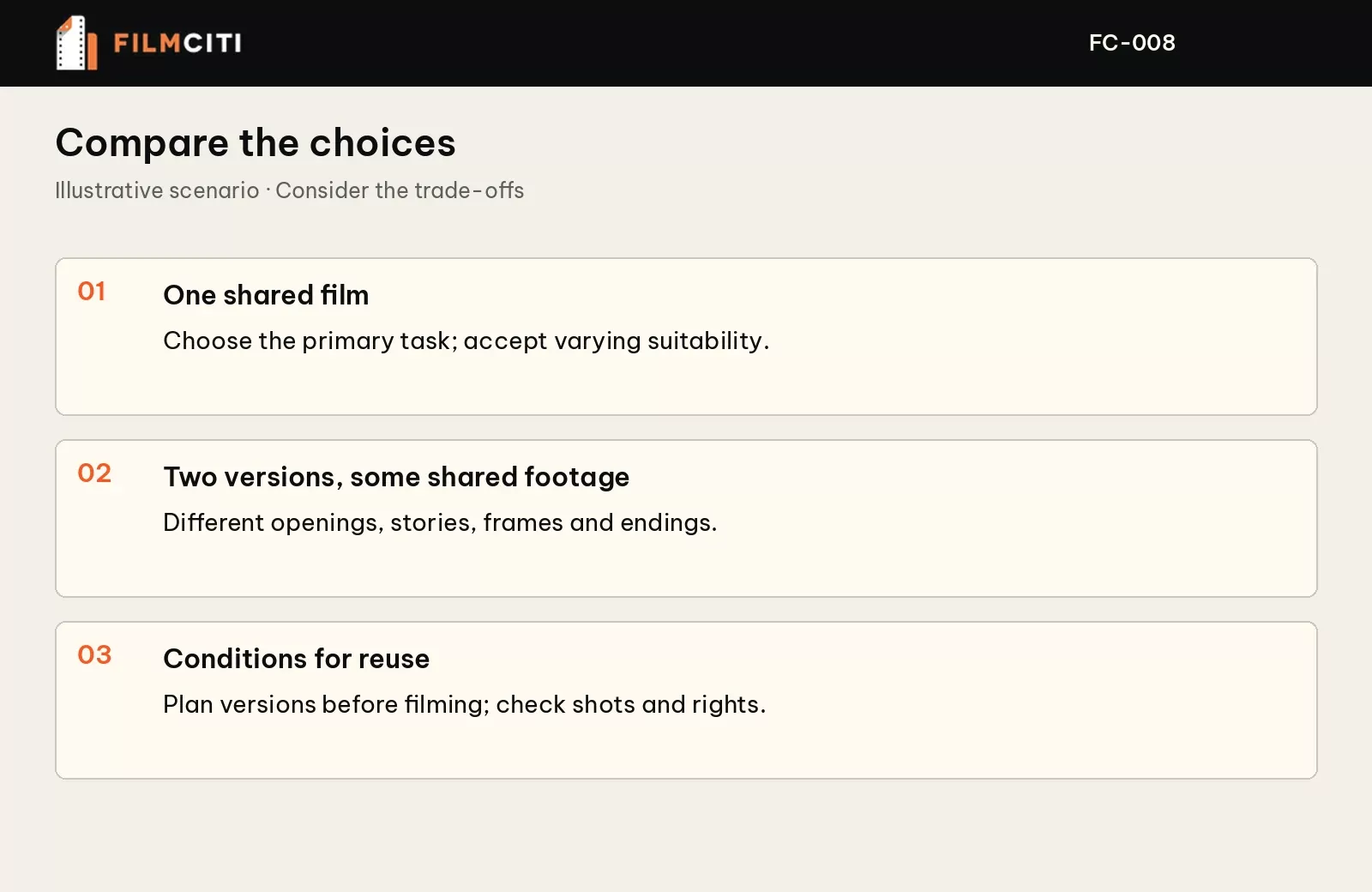
The brief needs to settle how the film will be used so the crew can design the right outputs
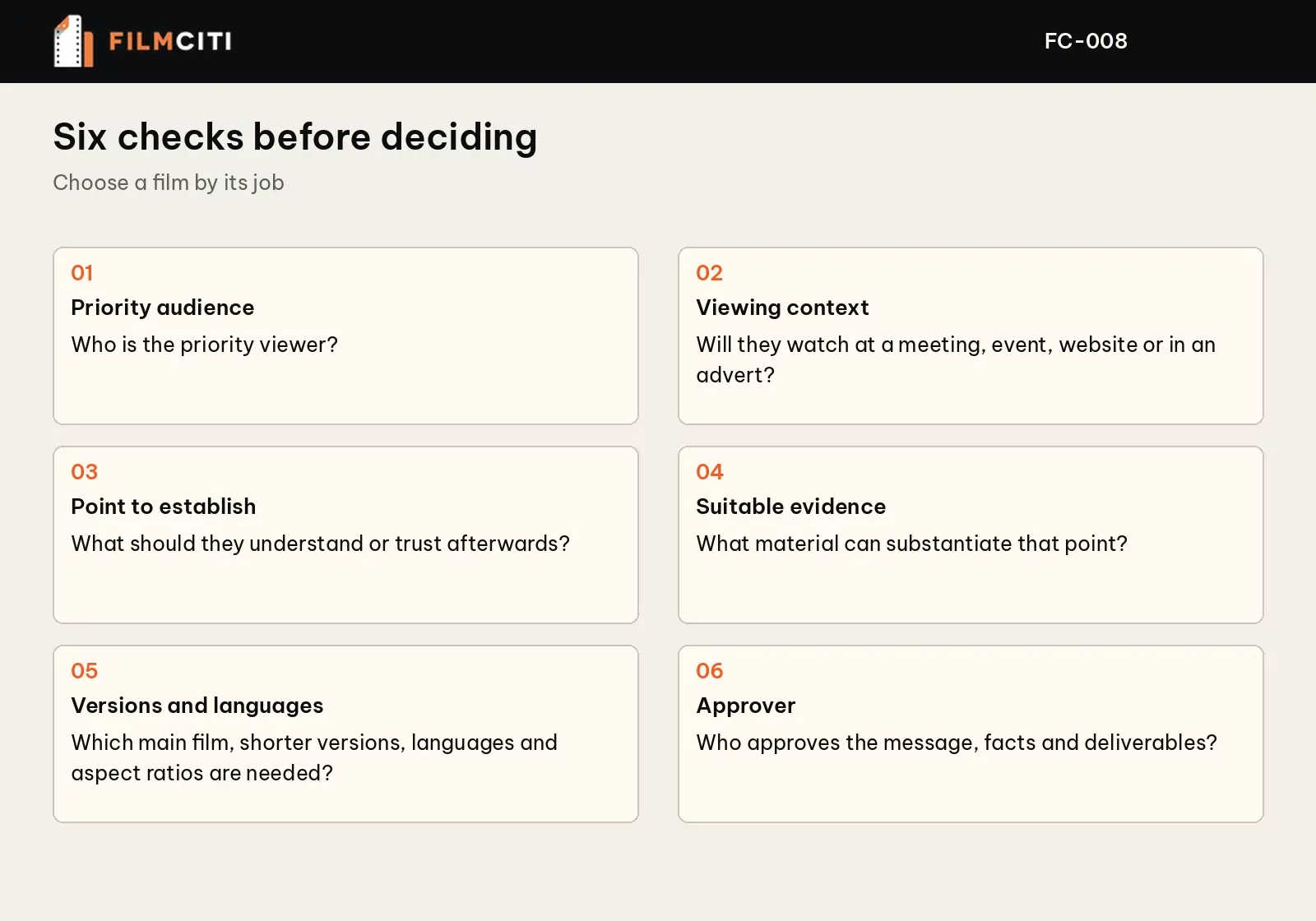
Before the meeting, answer the 6 questions below. The crew should push back when one output is being given too many jobs, and propose ways of sharing material where feasible.
- Who is the priority viewer?
- Will they watch at a meeting, an event, on the website or in a social media ad?
- After watching, what should they understand or believe?
- What material can prove it?
- Which main version, short versions, languages and frame formats are needed?
- Who confirms the message, the facts and the list of versions to deliver?
Download the Film type selection sheet by objective — Vietnamese template to note your requirements before the meeting. If this is your first project, also read about the decisions needed when making a corporate film for the first time, and see Filmciti's corporate video production service.
Torn between an introduction film and an advert? Send Filmciti a brief with where the film will be watched, the priority audience and the versions you need, so both sides can choose the production direction together.
Related service: Corporate film production
FAQ
Does a corporate video have to tell the company's founding story?
No. Include history only when it helps viewers understand a capability, choice or value being discussed; there is no need to cover every milestone.
Can an introduction film be cut into a TVC?
Part of the material can be reused if the usage rights are right and the images meet the requirements. However, the ad version usually needs a rewritten opening, storyline and ending; shortening the running time alone is not enough.
Does a longer film show capability better?
Not necessarily. One clear argument with focused evidence is usually more effective than a lot of unrelated information. Choose the running time by the film's job and its viewing context.